If you are considering a hillside home above the Sunset Strip, the view is probably what grabs you first. But in this part of Los Angeles, a beautiful vantage point is only one part of the decision. The right purchase also depends on access, jurisdiction, grading, parking, and fire-readiness, all of which can affect how the home lives day to day. This guide will help you look past the glamour and evaluate what really matters before you buy. Let’s dive in.
Why location details matter
Above the Sunset Strip, not every address is governed the same way. While the Strip is associated with West Hollywood, the hills north of the boulevard often fall within the City of Los Angeles, and the exact boundary can change the rules that apply to a property. According to West Hollywood area materials, single-family residences in the hills north of the boulevard are typically located in Los Angeles.
That distinction matters because the Sunset Strip is a nickname, not a formal jurisdiction. As noted by West Hollywood history resources, some addresses are under West Hollywood while others are under Los Angeles. For you as a buyer, that can affect zoning, grading requirements, parking rules, and fire-safety standards.
Start with jurisdiction first
Before you focus on finishes, floor plan, or view line, confirm which city governs the parcel. This is one of the most important early steps in a hillside purchase above the Strip because rules can vary from one property to the next.
A parcel-by-parcel review can help you understand what may apply to future improvements, additions, parking changes, or outdoor upgrades. If you are buying with long-term plans in mind, this step can save time and reduce surprises later.
Evaluate access like a daily user
A hillside home can look effortless in listing photography while feeling complicated in real life. Narrow, winding roads are common in the hills, and Los Angeles notes that hillside limited streets often serve only a small number of homes. That means your experience getting in and out of the property deserves careful attention.
Under Los Angeles hillside rules, some new construction or additions may require a minimum 20-foot continuous paved roadway from the driveway apron to the boundary of the hillside area. Lots on substandard hillside limited streets may also trigger street dedication or zoning-administrator review.
What to test during a showing
When you tour a home, try to picture ordinary moments, not just special occasions. A property should work when you come home late, host friends, receive deliveries, or need service access.
Use this quick checklist:
- Drive the route more than once if possible
- Notice street width and turning space
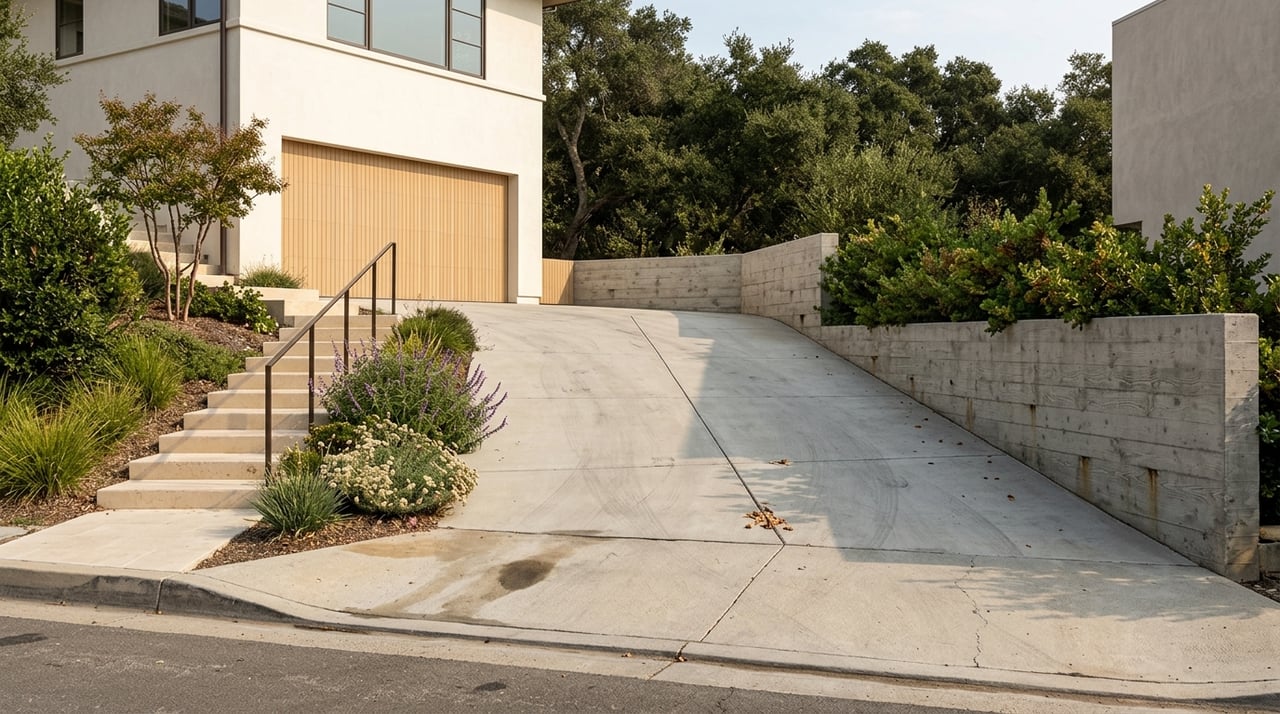
- Check driveway slope and ease of entry
- Measure how comfortably your vehicle fits in the garage
- Ask yourself where guests will realistically park
- Consider whether a moving truck or large delivery vehicle could access the property
Parking is a bigger deal than many buyers expect
Parking can become a major quality-of-life issue in hillside neighborhoods. On certain lots fronting a substandard hillside limited street, Los Angeles can require additional parking once the combined residential floor area exceeds 2,400 square feet, with a maximum of five on-site spaces total under the applicable rules.
The City also sets dimensional standards for parking spaces. According to Los Angeles hillside single-family guidance, standard stalls must be at least 8 feet 6 inches by 18 feet, and compact stalls must be at least 7 feet 6 inches by 15 feet. Tandem parking is allowed in private garages or private parking areas only up to two cars in depth.
This is one reason a two-car garage on paper may not feel equivalent from property to property. Width, depth, approach angle, and turning radius all matter when the streets are tight.
Red Flag days change the equation
In hillside areas, parking is not only about convenience. It can also affect emergency access. The Los Angeles Fire Department states that during Red Flag parking restrictions, vehicles parked in posted locations on narrow hillside streets within Very High Fire Hazard Severity Zones can be towed.
For you, that means the home should function even when curb parking is limited or unavailable. If a property relies too heavily on informal street parking, it may feel far less practical during high-risk weather conditions.
Understand grading and retaining walls
Site work is a core part of hillside ownership. In Los Angeles hillside areas, the Department of Building and Safety states that grading permits are required for many types of work, including slope repairs, landslide repairs, basement excavations, pool excavations, and retaining-wall cuts and backfill.
That does not mean every hillside home is a problem. It does mean you should pay close attention to how the lot has been shaped, supported, and drained over time.
What to look for outside
Outdoor spaces in the hills are often terraced instead of flat. As you walk the property, think about whether the outdoor layout truly supports daily living.
Focus on questions like these:
- Are stairs and pathways comfortable and practical?
- Do decks or patios feel usable beyond the view?
- Is drainage directed away from structures and gathering spaces?
- Do retaining walls appear substantial and well maintained?
- Is the outdoor area easy to move through at night or in wet weather?
The City also requires owners to maintain retaining walls, cribbing, drainage structures, and other protective devices in good repair under the Los Angeles Municipal Code. In some hillside situations, retaining walls over certain limits may need special review, and walls 8 feet or higher require a landscape screening plan.
Separate views from livability
A dramatic view can be worth a premium, but it should not distract from the practical side of ownership. In the hills above the Strip, some homes offer broad sightlines and strong natural light, while others trade some exposure for more privacy or a quieter feel. West Hollywood visitor materials highlight the area's city views and sunshine, which help explain why these properties are so visually compelling.
Still, the best purchase is usually the one that balances outlook with ease of use. A home with a slightly less dramatic view but better access, more workable parking, stronger outdoor function, and easier maintenance may serve you better over time.
Wildfire readiness should be part of your review
Wildfire resilience is an essential part of buying in hillside Los Angeles. CAL FIRE explains that Fire Hazard Severity Zone maps account for factors such as terrain, vegetation, climate, ember movement, and fire history. It also notes that fire can move faster and burn more intensely up steep slopes.
In Los Angeles, owners in Very High Fire Hazard Severity Zones must maintain year-round defensible space around structures. The Los Angeles Fire Department brush-clearance requirements are stricter in these zones, and brush clearance cannot be performed on Red Flag days.
Check insurance early
Hazard maps and insurance are related, but they are not the same thing. California's Department of Insurance notes, through the guidance cited in the research, that CAL FIRE hazard maps do not determine insurance rates or availability.
Even so, it is wise to explore insurance options early in your buying process. Underwriting may rely on broader wildfire-risk models, so you want a realistic picture of coverage and cost before you are deep into escrow.
A practical scorecard for hillside buyers
When comparing multiple homes above the Sunset Strip, it helps to use a simple framework. Los Angeles zoning and hillside guidance support a practical approach that weighs more than the view alone.
Here is a useful buyer scorecard:
| Category | What to review |
|---|---|
| Jurisdiction | Whether the property falls under Los Angeles or West Hollywood rules |
| Street access | Width, road condition, and ease of entry and exit |
| Parking | Garage usability, on-site space count, and dependence on street parking |
| Driveway geometry | Slope, turning radius, and vehicle clearance |
| Grading and drainage | Slope condition, runoff paths, and signs of repair or movement |
| Retaining walls | Apparent age, scale, maintenance, and location |
| Outdoor usability | Function of terraces, decks, stairs, and patios |
| Fire readiness | Defensible-space condition and Red Flag practicality |
| Daily comfort | Noise exposure, privacy, and ease of living |
For broader area orientation, the Hollywood Hills West Neighborhood Council area map can also help you understand local context as you compare homes.
What a strong hillside purchase looks like
In this market, the strongest hillside homes are rarely just the ones with the biggest view. They are the ones where access feels manageable, parking is realistic, site work appears well handled, and the property remains functional under everyday conditions.
That kind of balance matters whether you are looking for a full-time residence, a design-forward retreat, or a long-term hold in one of Los Angeles' most iconic hillside settings. If you want guidance evaluating homes above the Strip with both discretion and a sharp eye for livability, SANDLER + HIRSCH GROUP can help you navigate the details with clarity.
FAQs
What should you verify first when buying a hillside home above the Sunset Strip?
- Confirm the property's jurisdiction first, because addresses above the Strip may fall under either Los Angeles or West Hollywood, which can affect zoning, grading, parking, and fire-safety rules.
Why is parking so important for hillside homes above the Sunset Strip?
- Parking matters because narrow streets, substandard hillside street rules, garage fit, and Red Flag emergency restrictions can all affect how practical the home feels day to day.
What site conditions matter most for a hillside home in Los Angeles?
- Pay close attention to grading, drainage, retaining walls, terraces, stairs, and overall outdoor usability, since hillside ownership often involves more structural and maintenance considerations than a flat lot.
How does wildfire risk affect buying a home above the Sunset Strip?
- Wildfire risk can affect defensible-space obligations, parking restrictions during Red Flag conditions, and insurance planning, so it should be part of your review early in the process.
Are hillside homes above the Sunset Strip always in West Hollywood?
- No. While the Sunset Strip is closely associated with West Hollywood, many single-family homes in the hills north of the boulevard are located in the City of Los Angeles, so parcel-level verification is essential.