If your home has to support both your work and your downtime, layout matters more than ever. In Studio City, that balance feels especially relevant because so many households want calm residential living with easy access to an active creative corridor. The right design choices can help you protect focus during the day, recharge in the evening, and make the most of the local climate and setting. Let’s dive in.
Why Studio City Suits Creative Living
Studio City has a long connection to entertainment and production, and its commercial core along Ventura Boulevard includes a mix of office, retail, restaurant, hotel, entertainment-office, parking, and film-lot parcels. That backdrop gives the neighborhood a natural live/work rhythm, where residential streets and more active commercial zones sit close together.
City planning documents also describe the broader area as a group of distinct neighborhoods with numerous hills and vistas. The community plan emphasizes preserving and enhancing residential neighborhoods while improving the function, design, and economic vitality of commercial corridors. For you as a homeowner, that supports a way of living where privacy, comfort, and professional utility can exist under one roof.
Because the plan area is predominantly developed with single-family homes, many properties already lend themselves to room separation, outdoor use, and layered daily routines. If your work involves writing, editing, producing, design, meetings, or content creation, those traits can be especially valuable.
Start With Clear Work Zones
A creative home works best when it gives your day structure. CDC telework guidance recommends a dedicated workspace where you can control noise, lighting, and temperature. That level of control can help you stay focused and make long work sessions easier to manage.
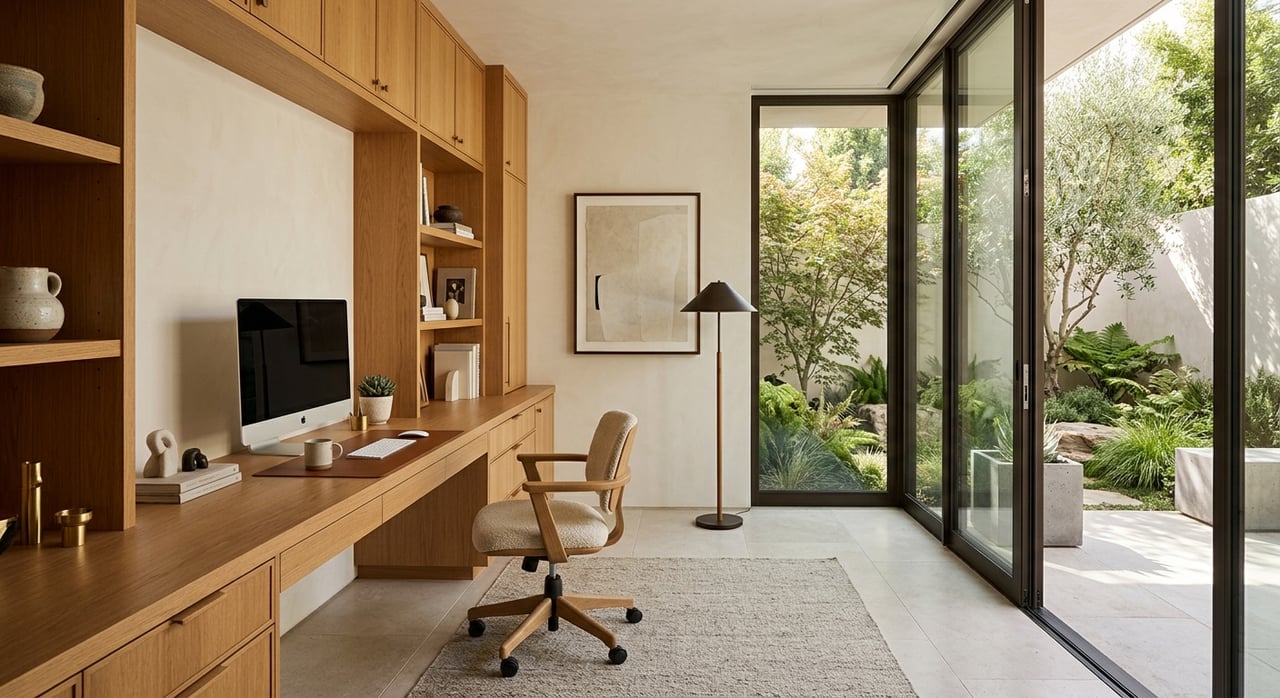
This does not always mean a large office. In many homes, a well-planned spare bedroom, den, or tucked-away secondary space can function far better than a desk placed in a living room or kitchen. The key is separation, so your work does not spill into every part of your home life.
What a dedicated workspace should include
- Controllable lighting
- Reduced screen glare
- Comfortable temperature
- Lower noise levels
- Enough room for a monitor and proper desk setup
- A clear boundary between work hours and home hours
CDC guidance also notes that a properly designed workspace can help prevent musculoskeletal issues. A room that looks beautiful but does not support daily use can quickly become frustrating, especially if your work keeps you at a screen for hours at a time.
Design for Flexibility, Not Just One Use
Creative work rarely looks the same every week. One season may require focused solo work, while another calls for virtual meetings, editing time, or a place for guests between projects. That is why a flexible second room can add real value.
Telework research reviewed by the CDC points to workspace design, ergonomic support, and communication tools as core resources for well-being. It also notes that weak boundaries can increase blur between work and home roles. In practical terms, that makes a flexible room especially useful because it can shift with your schedule while still keeping your household organized.
Smart uses for a second room
- Home office
- Editing or recording room
- Guest room
- Library or reading retreat
- Meeting space
- Quiet overflow workspace
In Studio City, where homes often need to serve more than one purpose, adaptability can be more useful than square footage alone. A room with a door, good light, and enough privacy can do a surprising amount of work.
Use Daylight Carefully
Studio City’s nearby climate data shows a mean annual temperature of 64.5°F, annual precipitation of 16.5 inches, and warm summer highs, with July averaging 85.8°F and August 88.3°F. That generally supports a lifestyle built around daylight and outdoor living, but it also means heat and glare should be part of your planning.
According to DOE guidance, natural daylighting works best when window and skylight placement is considered carefully. North- and south-facing windows are generally easier to manage for glare and heat than east- and west-facing windows. If you spend much of your day working at home, that matters because uncontrolled light can make a room uncomfortable even when it looks appealing.
Daylight choices that support creative work
- Position desks to reduce direct glare on screens
- Prioritize balanced natural light over harsh afternoon sun
- Treat window placement as part of the room’s function
- Consider how the room feels in both morning and late afternoon
A bright room is not always a productive room. In many cases, softer and more consistent daylight will support better focus than a dramatic wall of sun.
Think Carefully About Skylights
Skylights can be a strong fit in Studio City homes, especially if you want more natural light or added ventilation. DOE guidance notes that skylights can improve daylighting and airflow, which can make interior rooms feel more open and usable.
At the same time, skylights need to be planned with care. Placement and glazing matter because skylights can also increase summer heat gain and winter heat loss. If you are evaluating a home or considering updates, it helps to think about skylights as part of the whole house rather than as a simple design add-on.
When skylights make sense
- Interior rooms that need more daylight
- Workspaces that benefit from ambient overhead light
- Areas where ventilation improves comfort
- Homes where roof orientation and glazing are thoughtfully considered
In a creative setting, the goal is usually controlled brightness, not visual drama at any cost. Well-executed skylights can support that balance.
Build Ergonomics Into the Design
A creative home should not just look polished. It should feel good to use every day. CDC guidance recommends an office chair with armrests, a monitor about an arm’s length away, and a screen with the top at or below eye level.
Those details may sound small, but they shape how sustainable your setup feels over time. If your work includes editing, calls, writing, planning, or design review, a room that supports posture and screen comfort will serve you better than one designed only around aesthetics.
Everyday ergonomic essentials
- Supportive chair with armrests
- External monitor when possible
- Screen placement that reduces neck strain
- Breaks from prolonged screen time
- Enough desk depth for comfortable equipment placement
The most successful home workspaces usually blend clean design with practical comfort. In a market like Studio City, that kind of livability can make a home feel more intentional and better suited to modern routines.
Create Outdoor Space for Recovery
A home built around creative work also needs places where you can step away from it. NIH notes that even 5 to 10 minutes spent in nature, or with a view of nature, can reduce stress. Its biophilic design guidance also says that nature-connected environments can support well-being and reduce stress-related outcomes.
That research aligns well with local planning guidance in Studio City, which emphasizes shade trees, coordinated landscaping, attractive pedestrian environments, and compatibility with nearby residential areas. The streetscape plan also calls for drought-resistant riparian and canyon landscaping materials. Together, those ideas point toward outdoor rooms that feel calm, shaded, and low-maintenance.
Outdoor features that fit Studio City
- Shaded patios
- Courtyards
- Loggias
- Drought-tolerant planting
- Layered landscaping for visual softness
- Seating areas with garden views
In practice, these spaces can become the reset button in your daily routine. They create a visual and physical break between focused work and personal time, which can be especially important when both happen at home.
Balance Privacy and Energy
One of Studio City’s strengths is the contrast between quieter residential streets and the active Ventura Boulevard corridor. For creative households, that can be a major advantage. You can look for a home that gives you a sense of retreat while still keeping shops, offices, dining, and professional activity nearby.
This is where floor plan matters as much as location. Homes that place work areas away from main living spaces often support better concentration and a calmer feel after hours. If your schedule is irregular or project-based, that separation can help your home stay restorative instead of always feeling like an extension of the workday.
What to Look For in a Studio City Home
If you are evaluating homes through the lens of creative work and daily life, a few features tend to stand out.
Prioritize these design elements
- A dedicated office or flexible second room
- Window placement that supports usable daylight
- Protection from glare and excess summer heat
- Outdoor space with shade and low-water landscaping potential
- Room separation that helps define work and home zones
- Layouts that support both privacy and easy flow
The best homes do not always announce these strengths immediately. Often, the difference is in how thoughtfully the spaces connect and how well the home supports your routine from morning to evening.
Designing around creative work is ultimately about clarity. You want a home that helps you focus when needed, recover when needed, and use Studio City’s climate and neighborhood character to your advantage. If you are looking for a property that can support that kind of lifestyle, SANDLER + HIRSCH GROUP can help you evaluate homes with an eye for layout, design, and long-term livability.
FAQs
What matters most in a Studio City home office?
- A dedicated space with controllable noise, lighting, and temperature, plus basic ergonomic support and reduced screen glare.
Are skylights a good choice for a Studio City home?
- They can be, especially for daylight and ventilation, but roof placement and glazing matter because poorly planned skylights can add heat gain or heat loss.
Why should a Studio City home separate work and living zones?
- Telework research shows that clearer physical boundaries can reduce work-home blur and support focus and well-being.
What kind of outdoor space fits a Studio City lifestyle?
- Shaded patios, courtyards, loggias, and drought-tolerant landscaping fit both the local climate and local planning emphasis on landscaping and comfort.
Why is daylight planning important in a Studio City creative home?
- Warm summer temperatures and strong sun mean natural light can be a benefit, but only when glare and heat are managed carefully.